Pyramid B Tula Wednesday, 27 February 2013
Friday, 8 February 2013
Teotihuacan
![]() |
| Teotihuacan, http://college.holycross.edu/faculty/cstone/span312/teotihuacan2.jpg accessed February 7 2013 |
Teotihuacan was a once vibrant and powerful empire in
Mexico, now a place for intense archaeological study.
The population of the area was at its largest during the 1st to
the 3rd centuries AD. Over the course of a few hundred years the area was
witness to different forms of leadership and rule, and its monuments are
testament to the multiple ideas on government and power.[ii] A place, that originally
was home to “2,200 large multi-family units.”[iii] This demonstrates the
initial power structure of Teotihuacan. There were a lot of people to feed in a
single area, and there was an intense competiveness in order to utilize the
resources available.[iv]
Due to a large growth of the population, the scramble for resources, and the
influx of other cultures moving into the area, as with all issues of
colonialization, the cultures of Teotihuacan blended and created a new social
structure.[v]
One change was also within their religious practices. One such religion
was informed within The Feathered Serpent Pyramid.
[i]
UNESCO Website, Pre-Hispanic City of Teotihuacan, http://whc.unesco.org/en/list/414
accessed February 8, 2013
[ii] Sanders,
William T., Evans, Susan Toby, Rulership
and Palaces at Teotihuacan, in Palaces and Power in the Americas: From Peru
to the Northwest Coast Ed. JJ Christie and PJ. Sarro. The University of Texas
Press 2006
[iii]
Ibid
[iv]
ibid
The Feathered Serpent Pyramid
![]() |
| The Feathered Serpent, Screenshot http://www.academia.edu/217758/The_Feathered_Serpent_Pyramid_at_Teotihuacan_Decay_Conservation_and_Future_Perspectives Accessed February 8 2013 |
![]() |
| Expertly Compiled Forum on Teotihuacan, screen shot accessed February 7 2013 |
Ancient Mysteries - The puzzling Pyramids of Mexico 4/5: Act IV at 7.09 and continue here
Friday, 25 January 2013
What is Colonialism?
This blog assignment will be a short inquiry into the nature of colonialism as it pertains to two quite different locations.
Pikillactu in Peru Two images of Pikillacta, http://www.flickr.com/photos/heystack/8224022558/sizes/z/in/photostream/ accessed January 18 2013
and Thamugadi (Timgad) in Algeria Trajan's Arch, Thamugadi, Algeria, https://blogger.googleusercontent.com/img/b/R29vZ2xl/AVvXsEjvNVhob_CqJiPtpLOQdnEG2Ph3vJySfJFk7l50ddm9ZFSQxpujmtyiDQF3sW3xeF6lU4PYFL5sIUiuiYTS0zoPA8bPEfH3I-gxFnmh0Cexu4AA9a5Y35fYnijBEmv7AVPEKFLFBy7cswke/s1600/05-thamugadi-algeria-city-layout-670.jpg accessed January 18 2013 (images were also found here: http://www.flickr.com/photos/haqqoo/sets/72157626411041658/ accessed January 18 2013)
I have absolutely no knowledge of either location, so please forgive me if I find misguided information on either area.
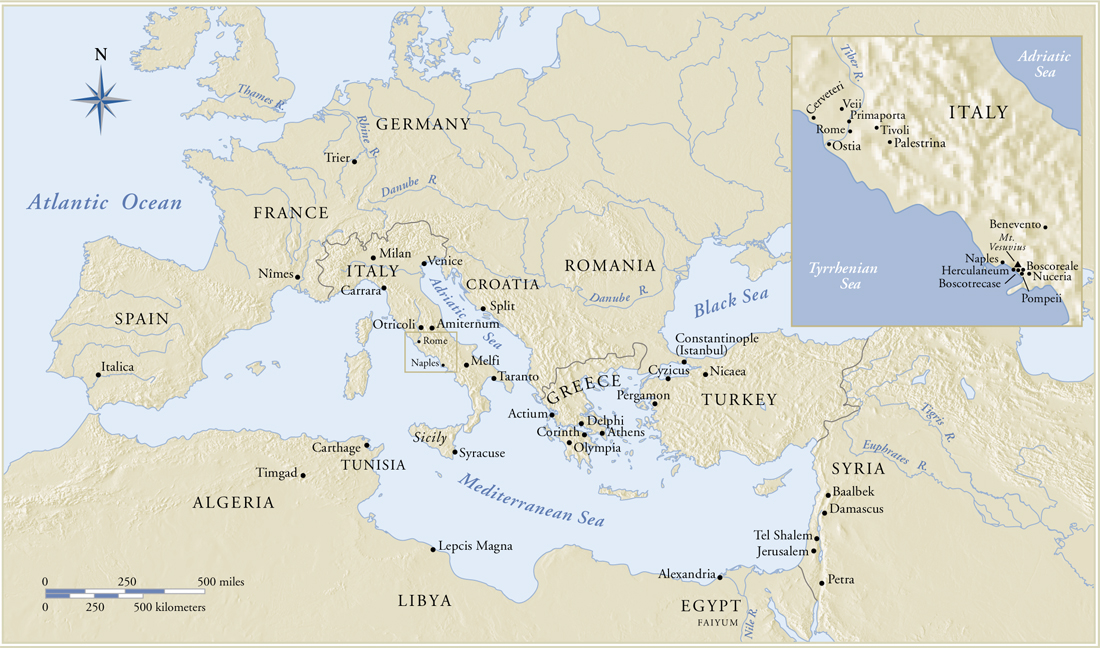
To begin I will speak of the Roman city of Thamugadi.
Map of the Roman World, http://schools.nashua.edu/myclass/lavalleev/Art%20History%20Pictures/ch10/map10.jpg accessed January 28 2013
Pikillactu in Peru Two images of Pikillacta, http://www.flickr.com/photos/heystack/8224022558/sizes/z/in/photostream/ accessed January 18 2013
and Thamugadi (Timgad) in Algeria Trajan's Arch, Thamugadi, Algeria, https://blogger.googleusercontent.com/img/b/R29vZ2xl/AVvXsEjvNVhob_CqJiPtpLOQdnEG2Ph3vJySfJFk7l50ddm9ZFSQxpujmtyiDQF3sW3xeF6lU4PYFL5sIUiuiYTS0zoPA8bPEfH3I-gxFnmh0Cexu4AA9a5Y35fYnijBEmv7AVPEKFLFBy7cswke/s1600/05-thamugadi-algeria-city-layout-670.jpg accessed January 18 2013 (images were also found here: http://www.flickr.com/photos/haqqoo/sets/72157626411041658/ accessed January 18 2013)
I have absolutely no knowledge of either location, so please forgive me if I find misguided information on either area.
To begin I will speak of the Roman city of Thamugadi.
Map of the Roman World, http://schools.nashua.edu/myclass/lavalleev/Art%20History%20Pictures/ch10/map10.jpg accessed January 28 2013
Conquered in 100ce, Thamughadi was created
as a military encampment. The Roman emperor Trajan stretched the Roman rule far
throughout Europe and into North Africa. Thamughadi is located in the province
of Numidia of Algeria. The Romans would take the very best of their grand architectural
achievements of the city of Rome and recreate this in a grid-like formation in
centralized locations of their empire. Thamughadi has many of the same
structures as we find in the Roman Forum. The temples, regia, and victory
arches that were erected to signify power and control. This area is considered
an area of colonialization. Algeria, has a history of constant invasions by
many civilizations throughout history. The building projects, such as Trajan’s
Arch reminds us of a lost history before settlers claimed the area as their
own. This has been copied over and over in all continents.
A grid like formation of settlements is
also witnessed in the area of Pikallacta in Peru. Archaeologists and scholars
have questioned how the space has functioned over the past few hundred years. What
Pikallacta signifies to the west is a need for a constant educational process
through discovery. Based in Lucre Basi at the eastern end of the valley of
Cuzco, the area has thought to be an administrative complex engineered by Wari
warriors. However, over the years people have thought it to be a storage
container for the Inca, due to indicators of spiritual sacred spaces within the
area. As opposed with Thamughadi, Pikallacta seems to no longer identify with a
group of people because there are very small indicators of one time inhabitants.
Thamughadi, we know was settled and through the architectural Roman program we
can base the structures on Roman norms of the time. However, due to its very
organized manner of formation scholars such as Edmund Thomas confirm that it
could only have been used for military purposes. Wari architectural style was
known for rigid, geometric rectangular plans,(Ross, p.15) and Pikallacta is a mathematical experience.
Compounds are seen to have been home to administrative centres and elite
residences, with a definite route of access between each. It is very calculated
and this can only be referenced in terms of control.
Disclaimer: I am unsure of how to properly insert reference points on blogger ... I have found information and used a couple of sentences from class texts and online sources.
http://archive.org/details/lesruinesdetimga00balliala
http://www.lonelyplanet.com/algeria/timgad/sights/archaeological-site/timgad
http://archaeology.about.com/od/pterms/g/pikillaqta.htm
Tuesday, 22 January 2013
A Virtual Tour of Rome
Rome: A virtual Tour of The Forum and the city’s great historical monuments.
I
have decided to imagine that I am setting off early in the morning of September
15 2013 to meet up with my tour guide for The three hour walking tour of
Ancient Rome as found on the travel guide Lonely Planet. http://www.lonelyplanet.com/italy/rome/activities/walking-tours/ancient-rome-half
I
have chosen the month of September for it is stated that the weather is the
most reasonable during this time and I am imagining being outside for a good
period of time. I do not want anything to distract my experience of this
ancient city, weather included. The advertisement for the tour promises a
walk-through of Rome’s 2000 year old history. Beginning near the Coliseum and
strolling through the majestic monuments and landscape.
Once inside the Coliseum I will consider all of the
ways in which the citizens of Rome were divided through class and wealth. Only
the wealthy were able to enter the Coliseum in its day, with the most
significant of them sitting nearest to the action. As the tour states “In three hours you'll relive life in
ancient Rome as a gladiator, emperor, slave, Vestal Virgin, senator, merchant
and goddess!” Hopefully, when reliving the life of a gladiator it will be the
life of a successful one.
Read more: http://www.lonelyplanet.com/italy/rome/activities/walking-tours/ancient-rome-half#ixzz2IAMetgos
A wonderful program on the street life of ancient Rome by the BBC and toured by Professor Mary Beard. http://www.bbc.co.uk/programmes/p00r6kfy
About six minutes away from the coliseum is the
Roman Forum. The site of political activity for all of the Roman Empire. Julius
Ceasar attempted to give the forum a new political vision. Unfortunately, he was murdered near the Theatre of his rival Pompey.[i]
The Regia, was the resting place for Ceasar and it was created for the members of political life to hold their meetings and discuss the urban life of Rome.
Pirro Ligorio, Regia, http://museu-digital.blogspot.ca/2011/01/o-foro-romano.html accessed January 22 2013
..... To Be Continued Wednesday January 23 2013 ....
Sunday, 13 January 2013
Welcome
This is my assigned blog for VAH 3388G Histories of Architecture and Urbanism
The topic of this blog: The Urban Form and Its Role in Colonization
My name is Jennifer Fraser and I am a mature student at Western University finishing my studies in Art History and Criticism. This blog is created as a class assignment to further enable me to understand the nature of Architecture in an urban environment. I have recently completed a course in Ancient Cities and am interested in how urban development has changed or perhaps has stayed the same throughout our collective histories. The posts that will follow will deal with eight specified topics. Topics ranging from situated architectural programs within Rome, Algeria, Peru, Spain, The United States of America, Canada and The full North American Grid. I hope that once the course is completed I will be able to write clear and concise critiques of urban life and all it entails.
I have chosen to introduce my blog with three images of the Princess Theatre in Edmonton Alberta. The Princess was built in 1915, and re-imagined as a movie theatre in the 1970s. As a child I would visit the Princess on, what I would lovingly refer to as, Special Saturdays. Saturdays I would spend going to see a film, then meeting my parents for tea at a local shop named Hanratty's and afterwards we would venture down to the corner bookshop and browse for the latest novels that caught my fancy. I have chosen these images because it is the first urban form I was aware of, outside of my home, and one that I remember fondly and still with a sense of belonging whenever it is thought of.
As a child I watched many films here. Two of the most intriguing, and somewhat frightening were The Dark Crystal and David Bowie in Labyrinth. Well suited films for a discussion on urbanism and issues of the other/ the stranger. We move in and out of forms constantly, yet do we ever stop to understand how these movements affect us as individuals and as a part of a larger community. I am excited to be in this class to dive into these issues.
Jennifer Fraser
Inside the Princess Theatre. 2012 http://www.flickr.com/photos/tubaism/7377817196/ accessed January 13 2013
The topic of this blog: The Urban Form and Its Role in Colonization
My name is Jennifer Fraser and I am a mature student at Western University finishing my studies in Art History and Criticism. This blog is created as a class assignment to further enable me to understand the nature of Architecture in an urban environment. I have recently completed a course in Ancient Cities and am interested in how urban development has changed or perhaps has stayed the same throughout our collective histories. The posts that will follow will deal with eight specified topics. Topics ranging from situated architectural programs within Rome, Algeria, Peru, Spain, The United States of America, Canada and The full North American Grid. I hope that once the course is completed I will be able to write clear and concise critiques of urban life and all it entails.
I have chosen to introduce my blog with three images of the Princess Theatre in Edmonton Alberta. The Princess was built in 1915, and re-imagined as a movie theatre in the 1970s. As a child I would visit the Princess on, what I would lovingly refer to as, Special Saturdays. Saturdays I would spend going to see a film, then meeting my parents for tea at a local shop named Hanratty's and afterwards we would venture down to the corner bookshop and browse for the latest novels that caught my fancy. I have chosen these images because it is the first urban form I was aware of, outside of my home, and one that I remember fondly and still with a sense of belonging whenever it is thought of.
As a child I watched many films here. Two of the most intriguing, and somewhat frightening were The Dark Crystal and David Bowie in Labyrinth. Well suited films for a discussion on urbanism and issues of the other/ the stranger. We move in and out of forms constantly, yet do we ever stop to understand how these movements affect us as individuals and as a part of a larger community. I am excited to be in this class to dive into these issues.
Jennifer Fraser
Unknown, The Princess Theatre 1915 http://en.wikipedia.org/wiki/Princess_Theatre_(Edmonton) accessed January 13 2013
Unknown, The Princess Theatre c.2008 http://edmonton-daily-photo.blogspot.ca/2008_08_01_archive.html accessed January 13 2013
Inside the Princess Theatre. 2012 http://www.flickr.com/photos/tubaism/7377817196/ accessed January 13 2013
Subscribe to:
Posts (Atom)